
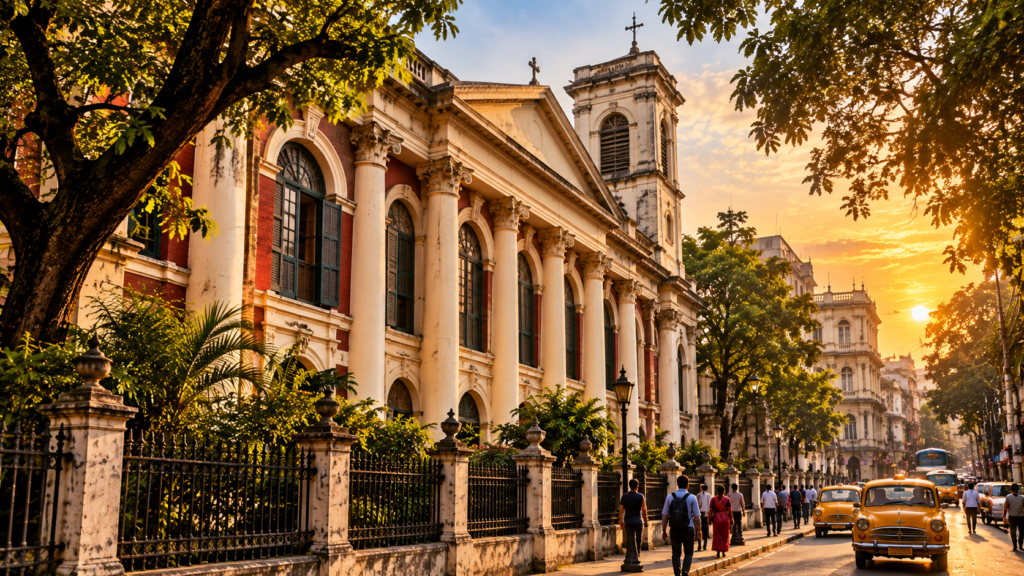

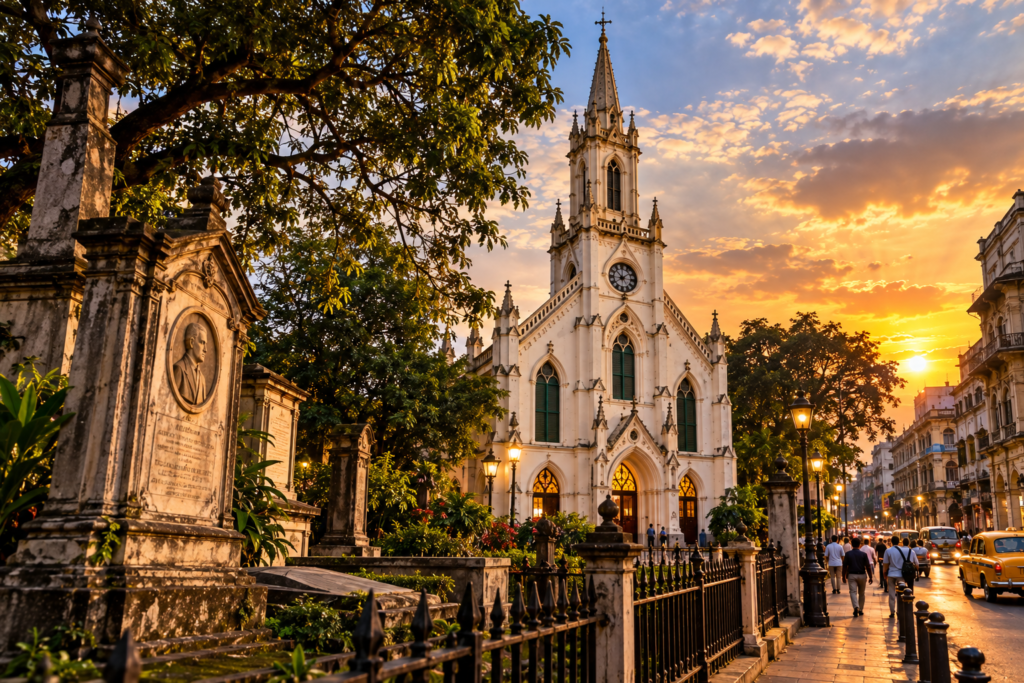
Kolkata is a city where history does not always stand behind grand gates or beneath the spotlight of famous monuments. Sometimes, it survives quietly beside a busy road, surrounded by offices, traffic and the everyday rush of urban life. The Old Mission Church on R. N. Mukherjee Road is one such remarkable landmark. Founded in 1770, the church has witnessed more than two and a half centuries of Kolkata’s transformation and remains an important part of the city’s religious, architectural and cultural heritage.
Today, it is easy to walk through central Kolkata without realising how much history exists around you. Yet the Old Mission Church belongs to a much older Kolkata — a city of the 18th century that was developing rapidly as a centre of trade, administration, education and cultural exchange. Its walls have witnessed generations of residents, missionaries, administrators, writers and ordinary citizens, making the church much more than an old place of worship.
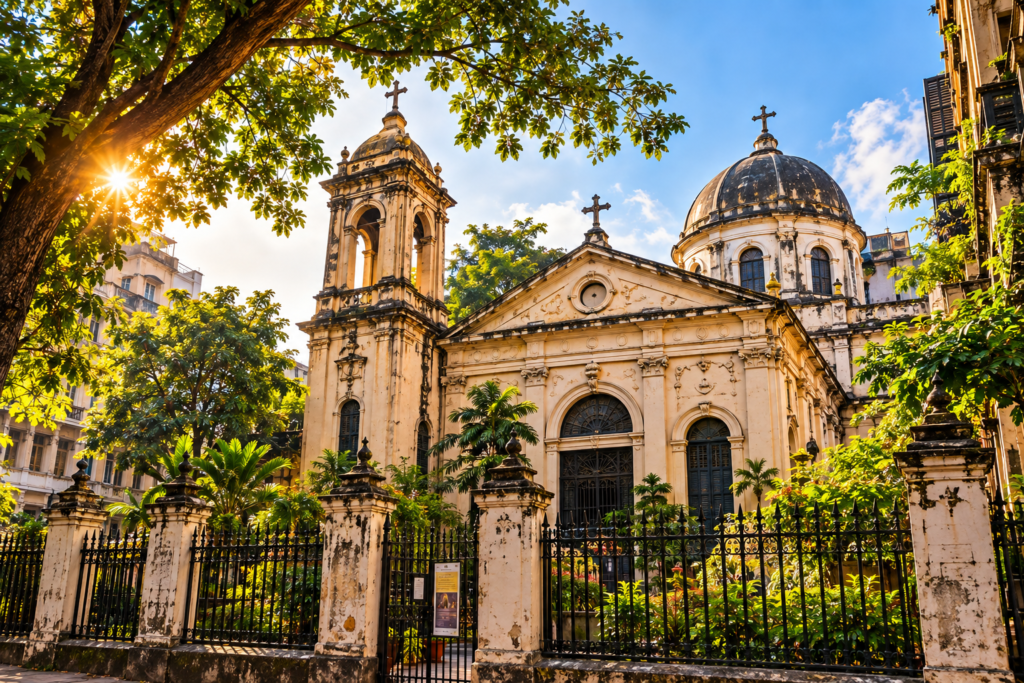
The Beginning of the Mission Church
The story of the church is closely connected with John Zachariah Kiernander, a Swedish Lutheran missionary who came to Calcutta in the 18th century. Kiernander had already been involved in missionary work in South India before arriving in Bengal. In Calcutta, he established a school and began developing a missionary institution that would eventually lead to the construction of the Mission Church.
The need for a new church became particularly important after the destruction of St. Anne’s Church during the events of 1756. With the European population of Calcutta growing, Kiernander pursued the establishment of a permanent place of worship. The foundation stone of the Mission Church was laid in 1767, and the completed church was consecrated on December 23, 1770.
The building represented an important development in the religious life of early Calcutta. It was not merely a private chapel for a small group. From its early years, the church was connected with a wider community and became an important institution in the growing colonial city.
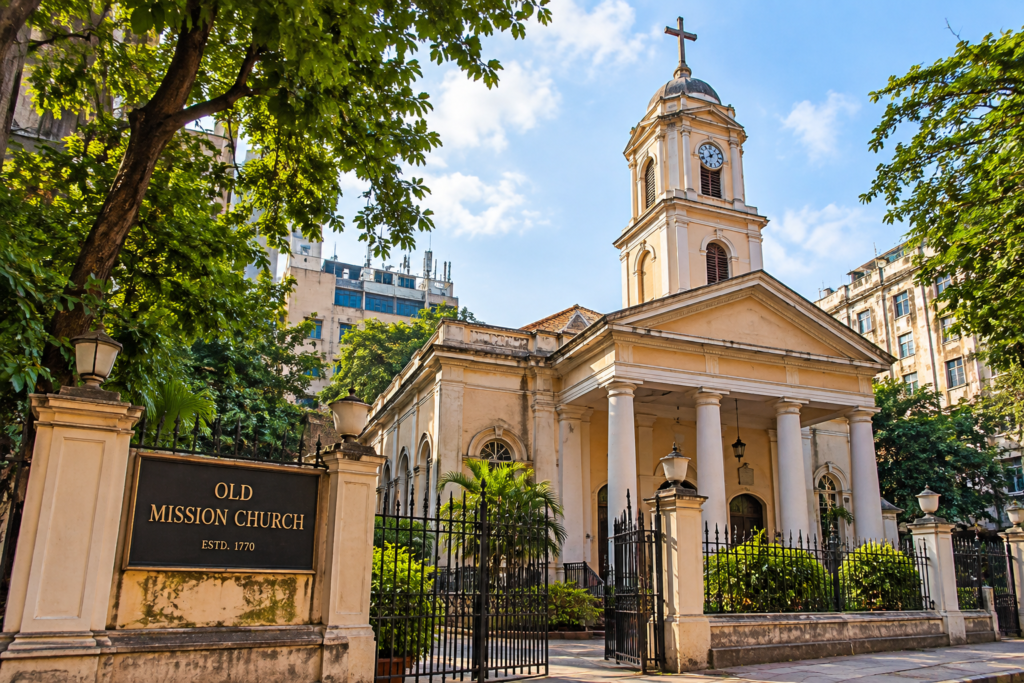
Why It Became Known as the Old Church
There is an interesting story behind the name by which Kolkata knows the building today.
Originally, historical records referred to it simply as the Mission Church. When St. John’s Church was established in 1787, the newer church became an important centre of worship for the city’s European community. The much older Mission Church subsequently became known as the Old Church. Over time, the name evolved into the commonly used expression Old Mission Church.
The road in front of the church also became associated with its history and was known as Mission Row.
The building was also popularly called Lal Girja, or Red Church, because of the reddish appearance of its earlier exterior. These names became part of the changing identity of both the church and its surrounding neighbourhood.
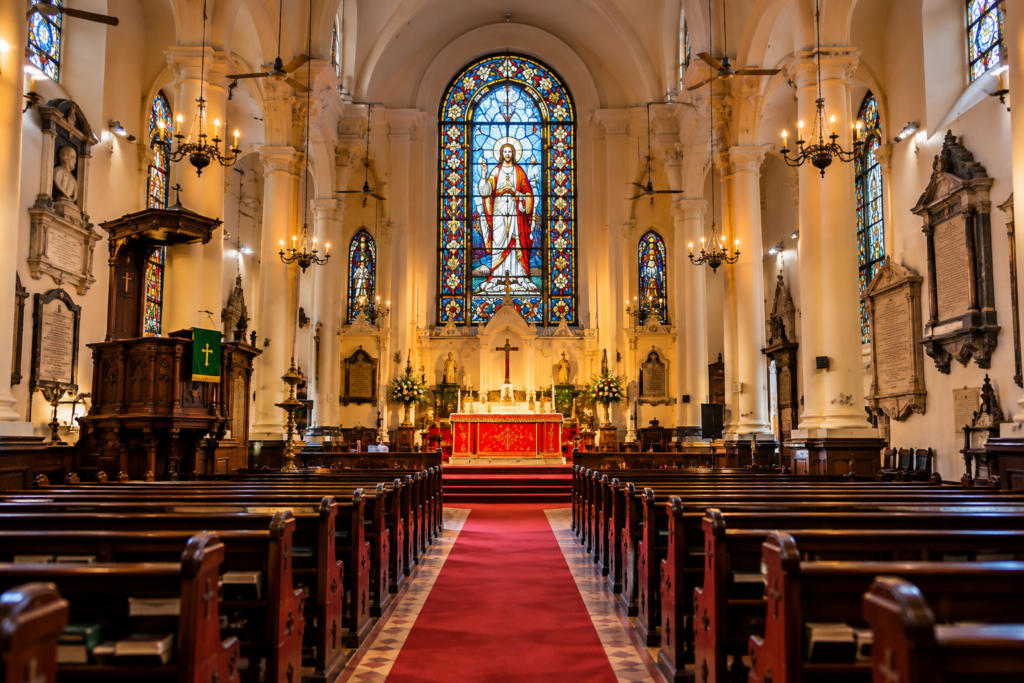
A Witness to the Making of Kolkata
The Old Mission Church has existed through some of the most important periods in Kolkata’s history.
When the church was founded in 1770, Calcutta was still very different from the enormous metropolitan city that exists today. The East India Company’s influence was expanding, commercial activity was increasing and European settlements were developing around the city’s older communities.
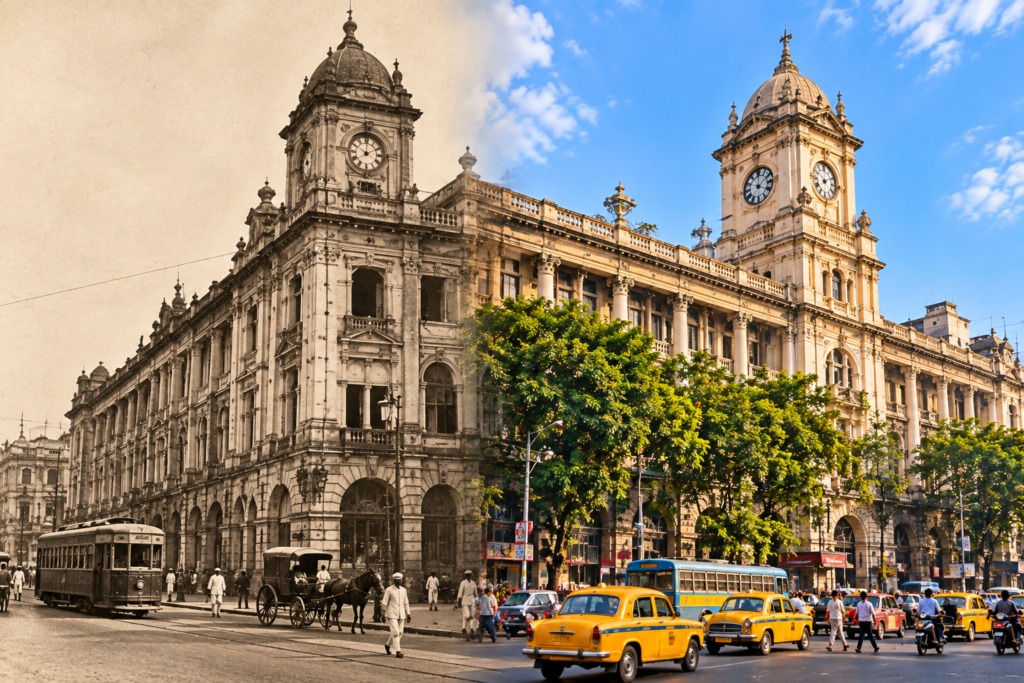
Over the decades that followed, the city grew around the church.
Roads changed.
Neighbourhoods expanded.
New institutions appeared.
Commercial districts developed.
Buildings were constructed and demolished.
Political power changed hands.
Yet the Mission Church remained part of the city’s physical landscape.
That continuity gives the building a special historical value. It provides a rare connection between modern Kolkata and the city of the 18th century.
A Place Connected With Michael Madhusudan Dutt
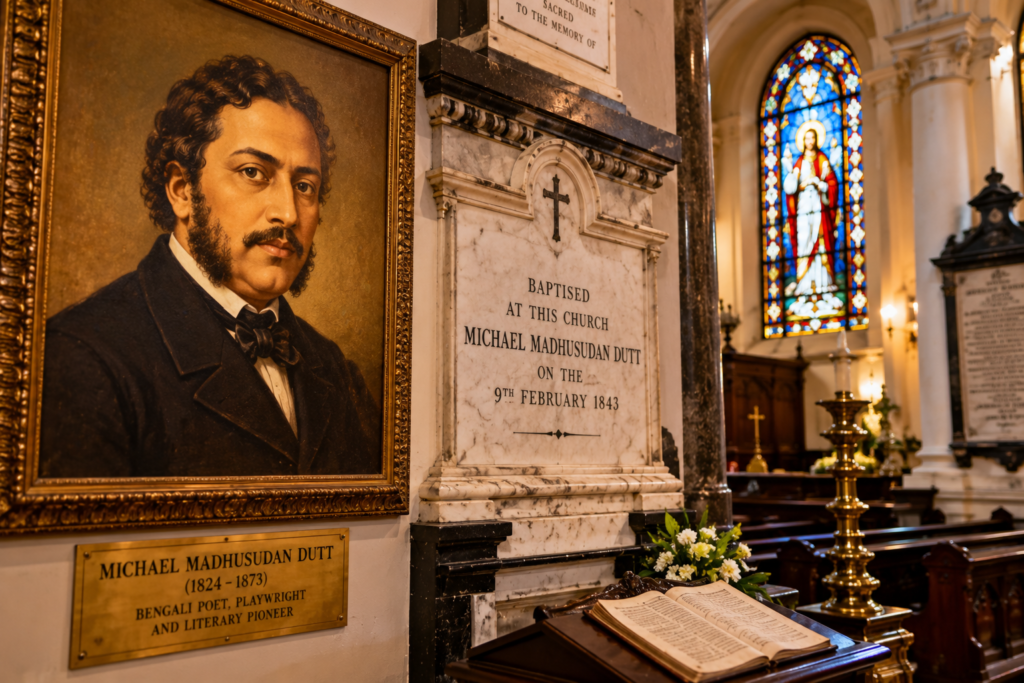
Perhaps the most fascinating cultural connection associated with the Old Mission Church is its relationship with Michael Madhusudan Dutt, one of the most influential figures in Bengali literature.
Historical accounts state that Madhusudan Dutt was baptised at the Mission Church on February 9, 1843, when he was still a student at Hindu College. The baptism became an important episode in the life of the future poet and playwright.
Madhusudan would later become one of the defining figures of modern Bengali literature. His literary experiments, dramatic works and poetic innovations helped transform Bengali writing during the 19th century.
Because of this connection, the Old Mission Church occupies a unique position at the intersection of Kolkata’s religious history and Bengali literary history.
The church is therefore not simply a place associated with missionaries and colonial-era worship. It is also connected with the life story of one of Bengal’s most important literary personalities.
A Building That Has Changed With Time
Like many historic buildings in Kolkata, the Mission Church has not remained completely unchanged.
Over the years, different additions and structural modifications were made to the building. A hall was constructed beside the church in the 18th century, an upper floor was added later, and the church itself was enlarged during the early 19th century.
These changes reveal something important about heritage architecture.
Historic buildings are not always frozen in a single moment. They evolve with the communities that use them.
The Old Mission Church expanded because the needs of its congregation changed. Its institutional role changed as new churches appeared in Calcutta. Its architecture absorbed alterations while retaining traces of its original history.
That layered character is part of its charm.
The Interior and Its Historic Details
Inside the church, the atmosphere is very different from the busy streets outside.
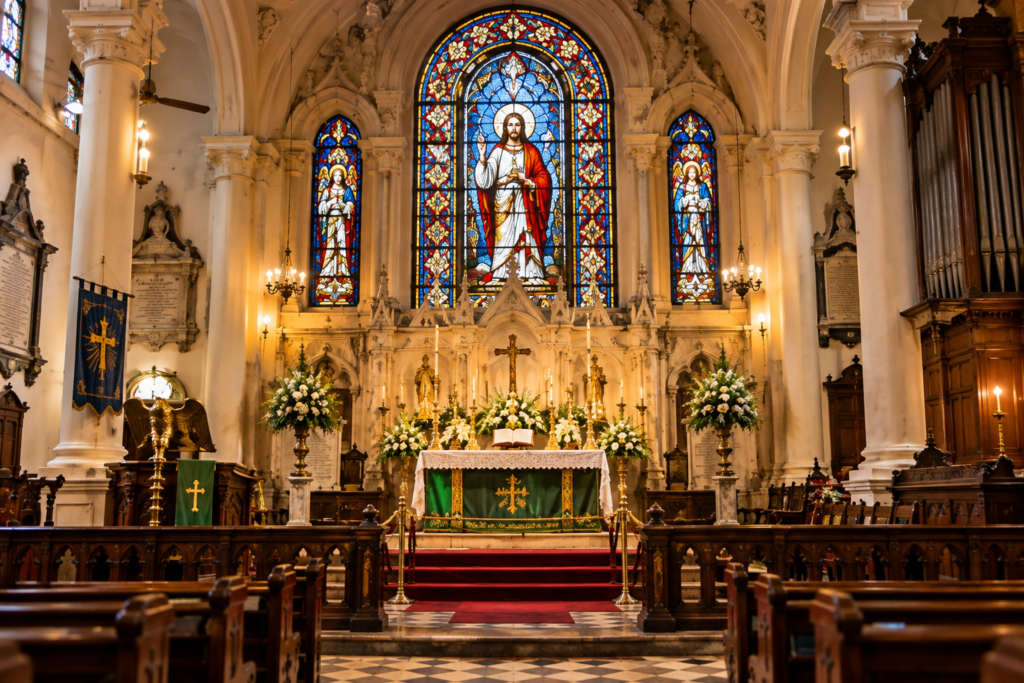
The nave is relatively intimate, while the interior contains a number of historic features, including stained-glass decoration associated with the altar, memorial tablets and a historic pipe organ. The walls themselves contain numerous plaques commemorating people connected with the history of the church and colonial Calcutta.
Among the most interesting features is the collection of marble tablets.
Each tablet represents a different life and a different chapter of history. Some commemorate administrators and members of the colonial establishment, while others preserve stories connected with people from very different backgrounds.
Together, these memorials transform the walls into a kind of historical archive.
Rather than reading history from a textbook, visitors can encounter individual names, dates and stories embedded directly into the architecture.
The Historic Pipe Organ
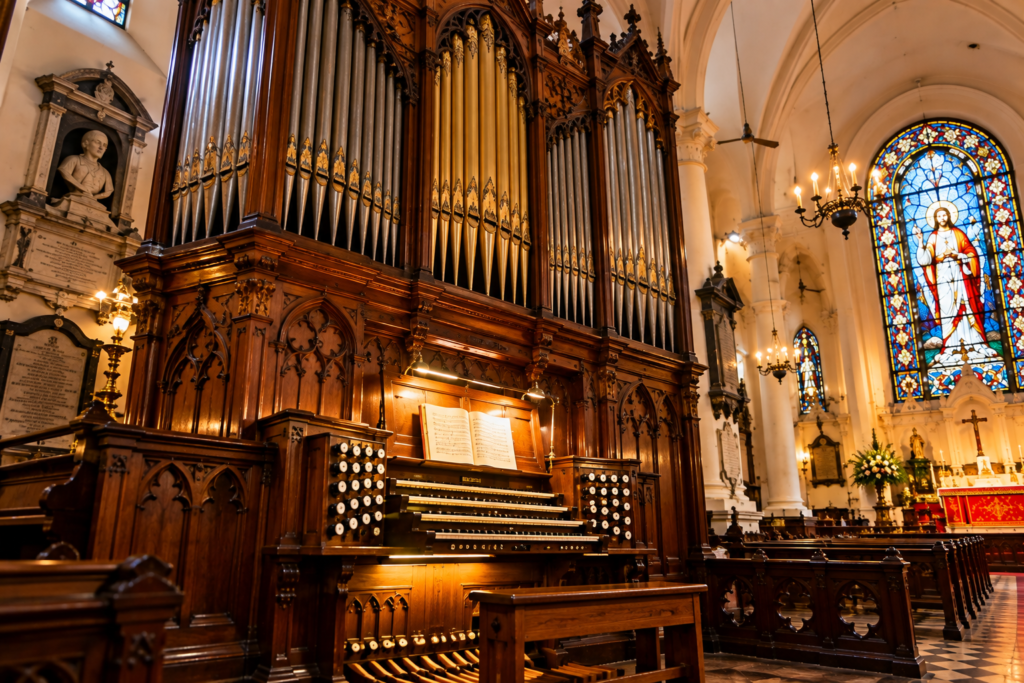
Another fascinating feature of the church is its historic pipe organ.
The instrument has survived for generations and remains connected with the musical tradition of the church. According to a 2024 report, the pipe organ was still being played and its musical heritage was being maintained by organist Victor Ambett, who had been associated with the instrument since the early 1970s.
The presence of a working historic pipe organ adds another dimension to the church’s heritage.
Architecture can preserve history visually, but music can make history feel alive.
When the organ sounds inside the old church, the experience connects the present with a tradition that has continued across generations.
Surviving Natural Disasters and Difficult Times
The church’s long history has also included periods of damage and difficulty.
Historical accounts record that the building survived the Great Cyclone of 1864 and the 1897 Assam earthquake, although the earthquake caused significant damage to one of its spires. The church has also faced the effects of later urban and environmental changes.
During the Second World War, Kolkata became a target during Japanese bombing raids. In December 1942, a bomb fell near the gate of the Mission Church. The blast damaged the windows, but the main structure survived.
These episodes form part of the building’s remarkable survival story.
A heritage structure that has existed for more than 250 years inevitably carries marks of time. Repairs, alterations and weathering become part of its physical history.
The Church and the Changing City
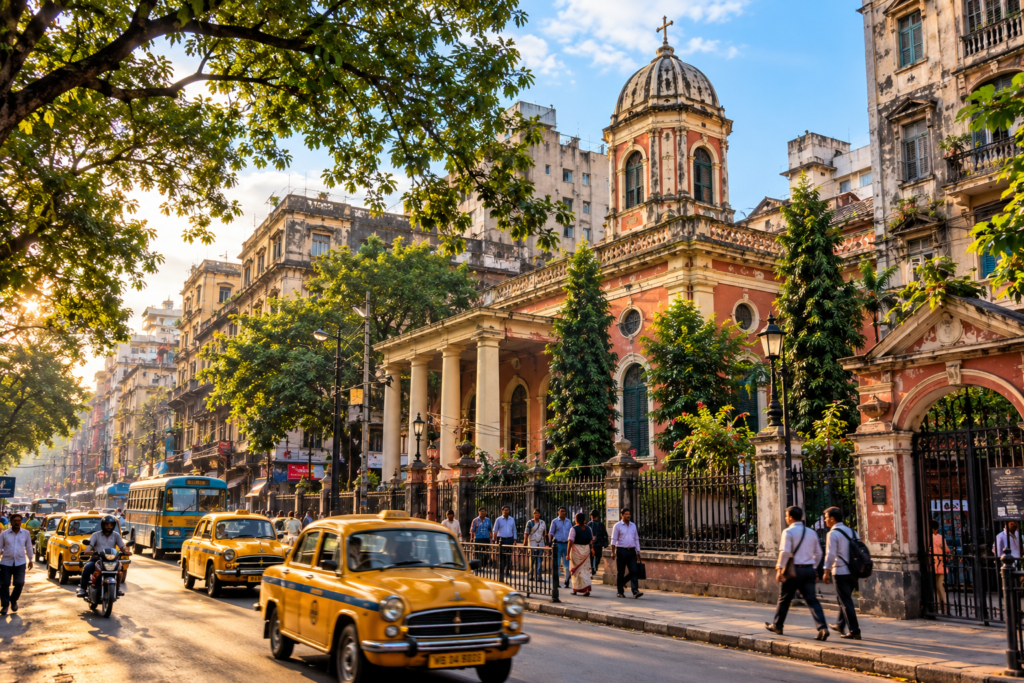
One of the most fascinating things about the Old Mission Church is its relationship with the city around it.
Central Kolkata today is filled with offices, commercial establishments, traffic and pedestrians. The pace of life is completely different from that of 1770.
Yet the church remains.
This creates an unusual contrast.
Outside its gates is the modern city.
Inside is an atmosphere shaped by centuries of religious practice, architecture, music and memory.
This contrast is one of the reasons why Kolkata’s old buildings are so valuable. They allow the modern city to retain a physical connection with earlier generations.
More Than a Religious Landmark
The Old Mission Church can be understood through several different layers.
It is a religious institution.
It is an architectural landmark.
It is part of the history of colonial Calcutta.
It is associated with the development of missionary education.
It is connected with Michael Madhusudan Dutt.
It preserves historic memorial tablets.
It retains a historic pipe organ.
And, perhaps most importantly, it is a surviving part of the physical landscape of 18th-century Kolkata.
These layers make the church particularly valuable to anyone interested in understanding how the city developed.
The Forgotten Stories of Central Kolkata
Kolkata’s most famous landmarks often receive the greatest attention.
Tourists photograph Victoria Memorial.
Visitors cross Howrah Bridge.
St. Paul’s Cathedral attracts architecture lovers.
The Maidan remains one of the city’s defining open spaces.
But the history of Kolkata does not end with these famous locations.
The city is filled with smaller landmarks that preserve stories just as fascinating.
Old churches.
Historic schools.
Colonial houses.
Ancient cemeteries.
Traditional markets.
Old libraries.
Religious institutions.
Narrow lanes.
Each one contributes another layer to the story of Kolkata.
The Old Mission Church is one of those places where several layers come together.
Its history begins in the 18th century, its walls carry memories of the 19th century, its survival extends through the 20th century, and it continues to exist in the 21st-century city.
A Living Link Between Past and Present
The most remarkable thing about a heritage building is not simply its age.
Age alone does not tell the whole story.
What matters is continuity.
The Old Mission Church has continued to exist through changing political systems, changing communities, changing architecture and changing urban life.
Its connection with Kiernander tells the story of early missionary activity in Bengal.
Its connection with Michael Madhusudan Dutt brings Bengali literary history into the same space.
Its historic organ connects the building with Kolkata’s musical traditions.
Its memorial tablets preserve individual stories from previous generations.
And its location in the middle of modern central Kolkata reminds us how dramatically the city has changed around it.
Why the Old Mission Church Still Matters
The Old Mission Church completed its 250th year in 2020, although celebrations were affected by the pandemic and the commemorative programme was subsequently held in December 2022.
More than 250 years after its foundation, the church continues to stand as one of Kolkata’s historic landmarks.
Its importance is not simply that it is old.
Its importance lies in the stories it carries.
It connects the early history of Calcutta with the modern city. It connects religious history with literature. It connects architecture with music. And it connects individual memories with the broader history of Bengal.
The Kolkata That Still Lives Behind the Streets
Perhaps that is what makes Kolkata different from many other cities.
History here does not always disappear when the city modernises.
It remains embedded in the landscape.
A busy road can run beside a centuries-old building.
A modern office district can surround a historic church.
A new generation can walk past a place that witnessed events more than two hundred years ago.
The Old Mission Church represents exactly this kind of Kolkata.
It is a reminder that the city’s past is not something confined to museums or history books.
It is still standing.
It is still part of the streets.
And it continues to tell its story to anyone willing to stop and listen.
More than 255 years after its foundation, the Old Mission Church remains one of those rare places where the history of Kolkata can be experienced not only through dates and names, but through architecture, atmosphere and continuity.
In a city constantly moving towards the future, the Old Mission Church quietly preserves a piece of the Kolkata that came before us.