

📖 Origins of the Royal Exchange
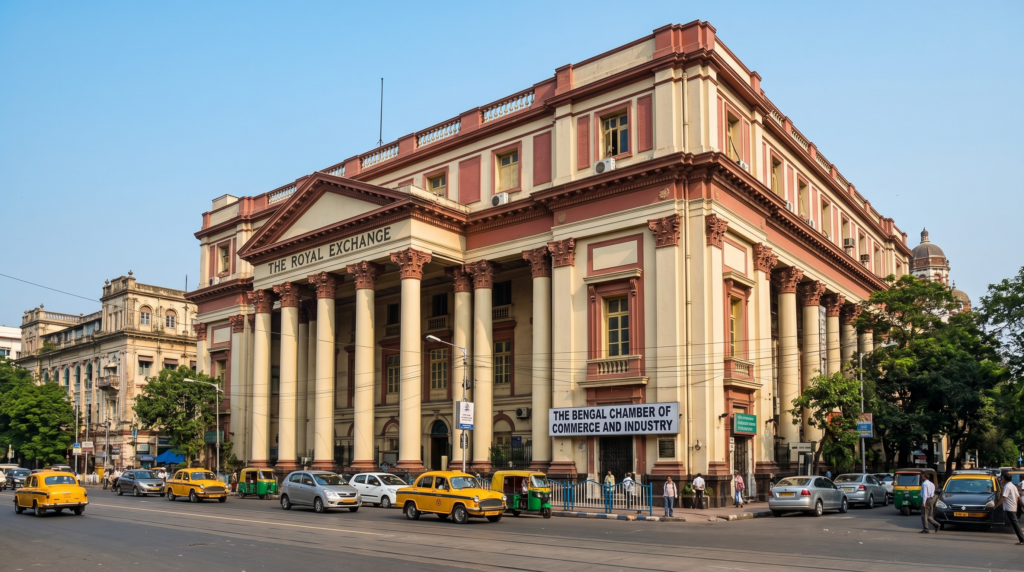
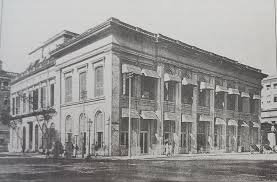
The Royal Exchange Building, located in the heart of B.B.D. Bagh, Kolkata, is one of the city’s most significant colonial-era structures. Originally constructed in the early 19th century, it served as the residence of Lord William Bentinck, Governor-General of India. By the mid-1800s, the building transitioned into a hub of mercantile activity, eventually becoming the headquarters of the Bengal Chamber of Commerce and Industry (BCC&I).
The Chamber itself was formally established in 1853, though its roots go back to 1833 when the Calcutta Chamber of Commerce was founded. The merger of these institutions gave birth to the Bengal Chamber, making it the oldest chamber of commerce in India.
🏢 The Building’s Role in Colonial Commerce
The Royal Exchange was not merely an office space; it was the nerve centre of trade and industry in Bengal. Its halls and boardrooms witnessed:
- Deliberations on trade policies during the British Raj.
- Negotiations on tariffs, shipping, and taxation.
- Crisis management during events such as the Indian Mutiny of 1857 and the silver crisis of 1876.
The Chamber played a crucial role in shaping commercial practices, drafting codes of conduct, and representing the interests of merchants to the colonial government.
🗂 Offices of the Past
Historically, the Royal Exchange housed:
- The Calcutta Chamber of Commerce before its merger.
- Offices of British trading firms dealing in jute, tea, and textiles.
- Meeting spaces for Indian entrepreneurs who gradually began to assert their presence in Bengal’s economy.
These offices were central to Bengal’s industrial growth, particularly in the jute and tea industries, which became defining exports of the region.
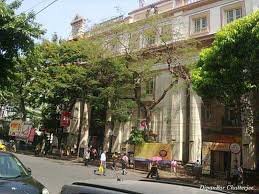
🏛 Offices That Still Operate Today
The Bengal Chamber of Commerce and Industry continues to function from the Royal Exchange, maintaining its legacy as a centre of commerce. Today, its membership spans:
- Agriculture and rural development organizations.
- Engineering and textile companies.
- Leather, FMCG, and service industries.
- Multinational corporations and Indian enterprises.
The Chamber now focuses on modern challenges such as digital transformation, sustainability, MSME growth, and global trade advocacy.
📜 Historical Significance
The Royal Exchange stands as a symbol of continuity. From colonial trade negotiations to modern economic policy discussions, it has remained a constant presence in Kolkata’s commercial landscape. Its architecture reflects the Palladian style, with grand columns and arched windows, embodying the fusion of European design with Indian mercantile spirit.

🏛 Legacy of the Bengal Chamber
- Oldest Chamber of Commerce in India (est. 1853).
- Played a role in industrial regulation and advocacy during colonial times.
- Continues to influence policy-making and trade practices in independent India.
- Serves as a platform for dialogue between government, industry, and society.
📌 Conclusion
The Royal Exchange is more than a building; it is a historical institution. Its walls have witnessed the evolution of Bengal’s economy from colonial trade to modern globalization. The Bengal Chamber of Commerce and Industry, housed within, remains a vital force in shaping India’s commercial destiny.